Need stamped concrete services in Elyria?
- Referral to independent local concrete providers
- Compare written estimates
- Decide with no obligation
- Built for new projects
No obligation
Request an estimate and compare
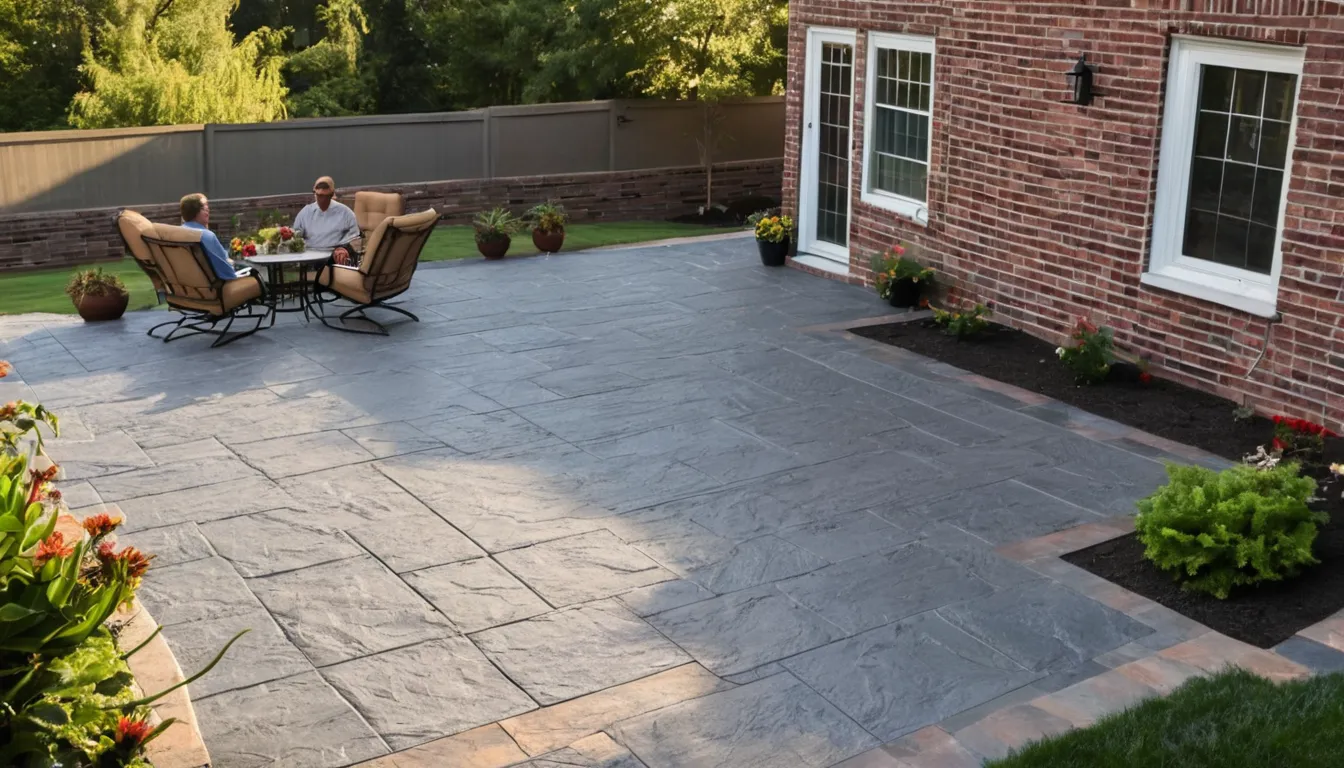
Stamped concrete gives you the look of stone, brick or slate from a single poured slab. It suits patios, walkways and pool surrounds where you want character without laying thousands of small pieces. This page explains how the pattern is made, what shapes the price and how to tell a careful job from a rushed one.
Sosmoothgame Concrete is a referral service. We do not pour or stamp concrete ourselves. Independent local providers in our network do the work, and you can compare their estimates at your own pace with no obligation. Looking at the ground, the drainage and the sealer before you decide helps protect your home and its future resale value.
Stamped concrete is regular poured concrete with a pattern pressed into the top while it is still soft. The finished surface can look like stone, brick, slate or even wood planks. Underneath, it is one solid slab. Think of pressing a cookie stamp into dough. The dough is the same, but the top now carries a design.
This page is about new work, such as stamped concrete patios, walkways and pool decks. It is not about concrete driveway repair. Independent providers in our network do the work. Sosmoothgame Concrete helps you understand it and compare your options.
A slab is only as steady as what it sits on. Picture a fine rug laid over a lumpy floor. It looks good for a while, then the bumps show through. Soft, wet or loosely packed soil lets a slab sink or crack. A careful provider removes poor soil, shapes the grade and packs a firm gravel base before any concrete arrives.
Cold winters with deep frost, hot humid summers, hail and spring flooding all test a patio. Water is the main troublemaker. When it turns to ice in the soil, the ground can push up. So the surface should slope gently away from the house. If your basement has a sump pump, mention it, because it hints that the ground gets wet.
If you ever suspect trouble with the foundation itself, that is a job for foundation repair experts. It is wise to sort that out before a new slab goes in beside the wall.
The provider sets wooden forms to mark the shape. Then comes the compacted base and usually steel bar or mesh to help hold the slab together.
Color is added in one of two ways. It can be mixed into the concrete, or dusted on the surface as a hardener. A release powder keeps the mats from sticking. Then the mats are pressed in by hand, like a baker pressing a lattice onto a pie crust. Timing matters, because concrete that is too soft or too hard will not take the pattern well.
Thin cuts called control joints give cracks a planned place to form. After curing, a sealer locks in color and helps shed water.
Ashlar slate, random stone, cobblestone and brick herringbone are common picks. Warm tans, soft grays, charcoal and clay tones are popular too. Natural stone looks suit ranch homes and bungalows. Brick patterns often fit frame houses from older decades.
Color choice matters in hot summers. A dark patio in full sun feels like a dark shirt on a sunny day. Lighter shades stay cooler under bare feet. Ask to see sample boards outdoors in daylight, because showroom lights change how color looks.
This kind of concrete flatwork fits many spots around a home:
Steep slopes and damp, shaded corners can get slick when wet. Ask the provider about a slip-resistant additive in the sealer.
Pavers are many small pieces. Stamped concrete is one slab. It is a bit like a patchwork quilt compared with a tablecloth. Pavers can be lifted and relaid if one stains or the ground shifts. A slab has fewer joints, so weeds have a harder time, but a crack cannot be swapped out like a single stone.
Neither choice wins every time. Ask for quotes on both and compare them side by side.
Most patios take several working days, though bigger or more detailed jobs take longer. Rain can push the schedule. Concrete is like bread dough: it needs its rest. Light foot traffic may be fine after a few days. Furniture usually waits about a week. Heavy loads wait much longer. Your provider can explain the timing for your mix and weather.
Upkeep is simple. Sweep often, rinse with a hose and use mild soap for stains. Plan to reseal every few years, much like waxing a car to keep water beading. Skip rock salt and harsh deicers in winter, because they can wear the surface. Use a plastic shovel and a little sand for grip.
A well-built patio adds usable space and curb appeal, and buyers notice tidy outdoor areas. A rushed one can fade, pool water or crack, and that can turn off a future buyer. Keep your written quote, the sealer type and any care notes, the way you keep papers for a new appliance.
Get two or three written quotes and compare like with like. Check these points:
Ask to see photos of past stamped jobs. Ask how they plan control joints. Ask what insurance and warranty terms they offer, and get those in writing.
Sosmoothgame Concrete connects you with independent local providers. You compare, then decide, with no obligation. Request a callback to check provider availability in your area.
Providers can show stone, brick, slate or wood looks so you can match your home.
Options include mixed-in color, surface tints and sealers that add shine or a softer matte look.
A packed gravel base and a gentle slope help water move away from your house.
Planned control joints guide cracks, and a sealer helps protect color through changing seasons.
Prices vary by size, pattern, soil and local rates. These are typical U.S. ranges only. Ask each provider for a written quote that lists materials, prep and sealing so you can compare fairly.
| Item | Typical range | Notes |
|---|---|---|
| Stamped patio, installed | $10 – $20 per sq ft | Detailed patterns cost more |
| Plain poured patio, for comparison | $6 – $12 per sq ft | Simpler finish, less labor |
| Color and accent upgrades | $1 – $4 per sq ft | Two-tone and antiquing add cost |
| Base prep and grading | $1 – $5 per sq ft | Poor or wet soil raises the price |
| Small patio, about 150 sq ft | $1,500 – $3,000 | Total depends on design and site |
| Resealing every few years | $1 – $3 per sq ft | Helps protect color and surface |
Tell us the size, location and look you want for your patio, walkway or pool surround.
We refer you to independent providers in our network who handle stamped concrete projects.
Review thickness, base, pattern, color, sealer and drainage details side by side, with no obligation.
Pick the provider you trust, and they schedule and complete the work.
We explain how stamped concrete works so you can ask better questions and decide calmly.
Independent providers in our network know frost, storms and soil in your area.
Side-by-side written estimates make price and scope differences easy to see before you commit.
A careful install helps keep your outdoor space attractive for years and future buyers.
Typical U.S. prices run about $10 to $20 per square foot, depending on pattern, color, soil and local rates. Request written estimates from a few providers so you can compare what is included.
Neither is better for every yard. Stamped concrete is one slab with fewer joints, while pavers can be lifted and replaced one at a time. Ask providers to quote both, then compare cost, look and upkeep.
Most stamped surfaces are resealed every two to three years, though sun, weather and foot traffic change that. Regular sealing helps protect color and repel water, so ask your provider for a schedule.
Tell us about your driveway or patio plans. Request an estimate and a local provider in our network can reach out. There is no obligation to hire anyone.
No obligation